
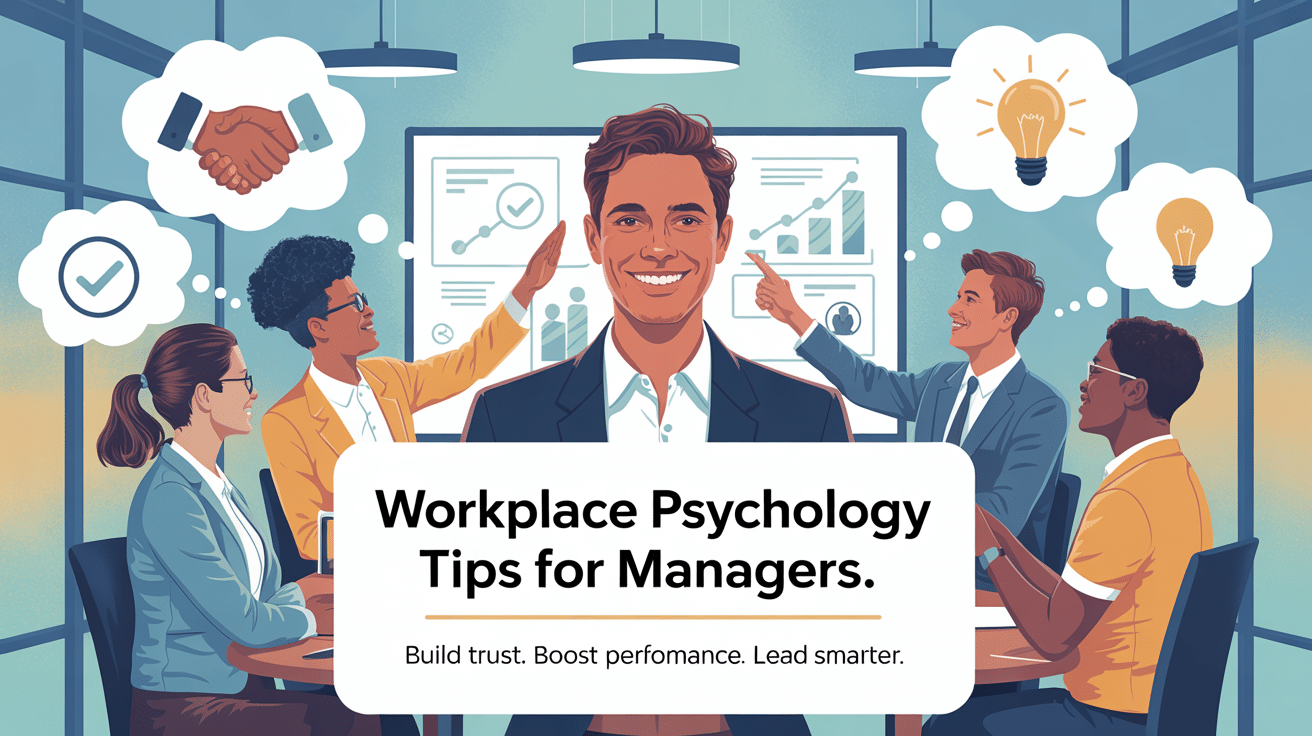
Managing a team is more than delegating tasks—it’s about understanding the psychology that drives human behavior at work. Workplace psychology for managers reveals how motivation, trust, and communication directly shape team performance. When you apply these strategies, you move beyond simple supervision and step into the role of a true leader.
In this guide, we’ll explore practical workplace psychology tips managers can use to build stronger relationships, reduce stress, and inspire consistent results.
Why Workplace Psychology Matters for Managers
- Boosts employee motivation and engagement.
- Reduces conflict by addressing root causes, not symptoms.
- Builds trust and loyalty, reducing turnover.
- Enhances problem-solving and innovation.
According to a Gallup study, managers account for 70% of variance in employee engagement—a powerful reminder that psychology-based leadership makes measurable impact: Gallup Report.
Practical Workplace Psychology Tips for Managers
1. Understand Motivation Beyond Money
Money matters, but intrinsic motivators like purpose, recognition, and autonomy drive long-term engagement.
- Create meaningful goals.
- Recognize small wins regularly.
- Encourage ownership of projects.
2. Practice Active Listening
Managers who listen well build trust faster.
- Maintain eye contact and avoid multitasking.
- Use reflective statements (“What I hear you saying is…”).
- Let employees finish their full thought before responding.
Learn more in our article on managing difficult customer situations with the HEART Method.
3. Apply Emotional Intelligence (EQ) Daily
EQ is a manager’s secret weapon.
- Be aware of your own triggers.
- Stay calm in tense situations.
- Recognize emotions in others and adjust your approach.
4. Foster Psychological Safety
When employees feel safe to share ideas without fear, innovation thrives.
- Encourage questions without judgment.
- Celebrate failures as learning opportunities.
- Protect your team from blame culture.
5. Use Positive Reinforcement Strategically
Praise is most effective when specific and timely.
- Say “Your clear breakdown of the project saved us hours” instead of “Good job.”
- Recognize effort, not just results.
Stress Management for Managers and Teams
High-performing teams need leaders who can balance productivity with well-being.
- Introduce micro-breaks during long work sessions.
- Model healthy boundaries (don’t send emails at midnight).
- Offer resources for mental health support.
Check out our full Stress Management & Mental Well-being category for more strategies.
Real-World Application: A Case Study
One manager at a mid-sized tech company applied active listening and weekly recognition rituals. Within 90 days:
- Team productivity increased by 22%.
- Reported job satisfaction improved by 30%.
- Employee turnover risk dropped significantly.
These results show how small, psychology-based changes lead to measurable outcomes.
Key Takeaways
- Motivation comes from purpose and recognition, not only paychecks.
- Listening and empathy strengthen relationships.
- Emotional intelligence and psychological safety drive innovation.
- Stress management is essential for sustainable performance.
Conclusion
Workplace psychology for managers isn’t about theory—it’s about practical steps that create healthier, more motivated teams. By applying these principles consistently, you can transform your leadership approach and build high-performing teams that thrive.
Start small. Choose one strategy—like active listening or psychological safety—and make it a daily practice. Over time, these changes compound into lasting results.
Frequently Asked Questions About Workplace Psychology for Managers
1. What is workplace psychology and why is it important for managers?
Workplace psychology is the study of human behavior in organizational settings. For managers, it’s essential because it helps them understand motivation, communication, and stress factors—leading to stronger teams and higher performance.
2. How can managers improve employee motivation without increasing salaries?
While money is important, intrinsic motivators such as recognition, purpose, and autonomy drive long-term engagement. Managers can improve motivation by setting meaningful goals, celebrating achievements, and giving employees ownership of their work.
3. What is psychological safety in the workplace?
Psychological safety means employees feel safe to speak up, share ideas, and take risks without fear of criticism or punishment. Managers who foster this environment encourage innovation, trust, and stronger collaboration.
4. How does emotional intelligence (EQ) impact leadership?
Managers with high EQ can recognize and manage their own emotions while understanding others’. This skill helps reduce conflicts, improve communication, and build stronger relationships with team members.
5. Can workplace psychology reduce employee turnover?
Yes. When managers apply workplace psychology strategies like active listening, recognition, and stress management, employees feel valued and supported—making them less likely to leave for another job.
6. What’s a simple psychology tip managers can start using today?
Start with active listening. Give employees your full attention, reflect their words back, and validate their concerns. This small shift builds trust and improves communication instantly.